
Summer makes everyone sweat more — but for roughly 15.3 million Americans with hyperhidrosis, summer doesn’t just mean a damp shirt. It means soaking through clothes before 9 a.m., avoiding handshakes, canceling plans. The good news? There are seven strategies that reduce summer sweating, ranked from what you can do today to what delivers permanent results. We’ll cover the clinical evidence behind each one so you can decide what fits your situation.
For context on understanding when your sweating crosses into clinical territory, start there. Here, we focus on what to actually do about it.
- Hyperhidrosis affects 4.8% of Americans — 15.3 million people — with peak prevalence of 8.8% in adults aged 18–39 (Archives of Dermatological Research, 2016)
- Clinical-strength antiperspirant alone achieves adequate response in only 15.3% of patients; pairing it with oral glycopyrrolate raises that to 55.9% (Dermatologic Therapy, 2020)
- miraDry at 6 months post-treatment: 95% of patients showed no or minimal sweating on clinical testing (Aesthetic Plastic Surgery, 2025)
- 225 mg of caffeine (one cup of coffee) significantly increases activated sweat gland output and density vs. no-caffeine control — a crossover RCT finding (Frontiers in Nutrition, 2022)
Why Does Summer Heat Make You Sweat So Much More?
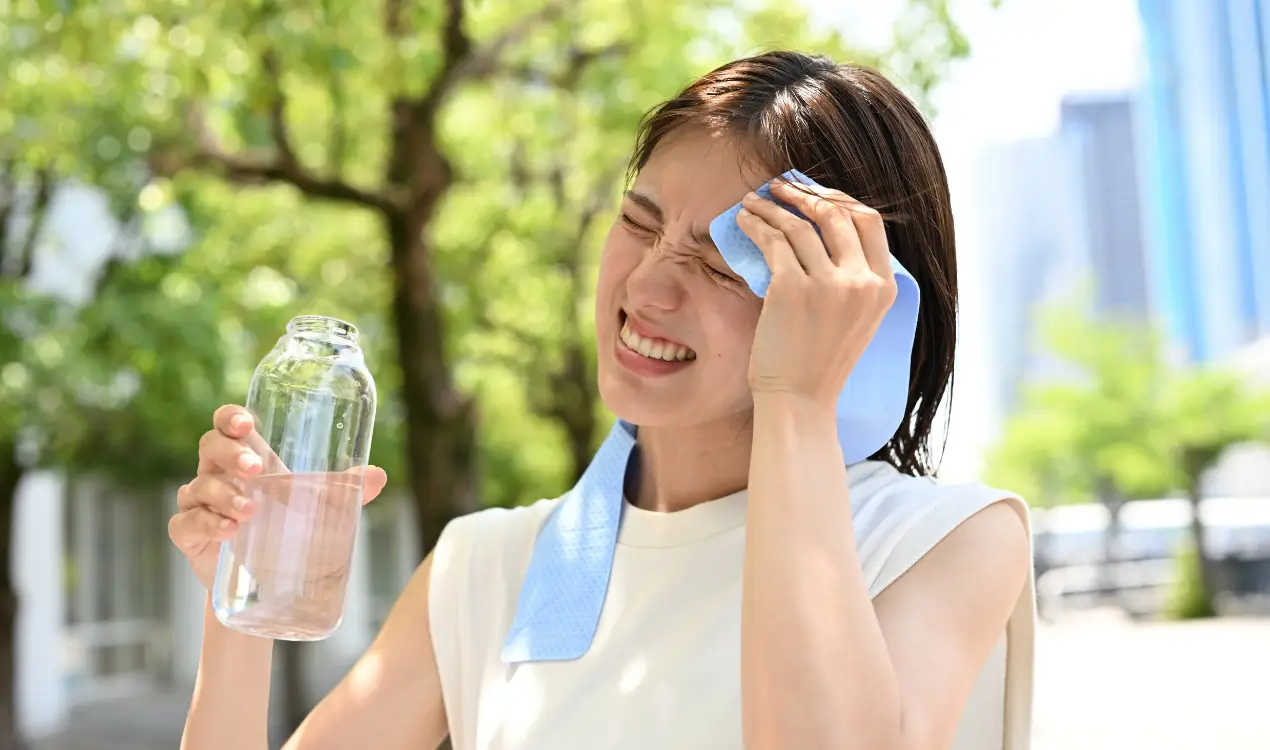
Hyperhidrosis affects 4.8% of the U.S. population — approximately 15.3 million people — and peaks at 8.8% prevalence among adults aged 18 to 39, the group most likely sweating through summer workdays, social plans, and events (Archives of Dermatological Research, 2016). Your body uses eccrine sweat glands to cool itself: when core temperature rises, the sympathetic nervous system signals glands to produce sweat, which evaporates and pulls heat from the skin. Summer turns that signal up for everyone — but for people with hyperhidrosis, the signal was already misfiring before the thermometer climbed.
Primary hyperhidrosis isn’t caused by heat. It’s a neurological condition in which sympathetic nerve fibers send exaggerated sweat signals with or without a temperature trigger. Summer amplifies an existing dysfunction rather than creating a new one. Understanding that distinction matters because it shapes which strategies work: you’re not just trying to cool down — you’re trying to dampen an overactive nerve response.
Up to 48% of people with hyperhidrosis report poor or very poor quality of life, scoring worse on functioning measures than patients with psoriasis, eczema, or acne combined (American Journal of Clinical Dermatology, 2023). Only 27% have ever received a formal diagnosis. Most are managing alone — which is why having a ranked, evidence-based strategy list matters.
1 Switch to a Clinical-Strength Antiperspirant

Aluminum chloride hexahydrate at 20% concentration produces statistically significantly greater axillary sweat reduction than lower-concentration formulas — confirmed by a double-blind randomized controlled trial (p = 0.0002) (Journal of Cosmetic Dermatology, 2015). Standard drugstore antiperspirants use aluminum compounds at lower concentrations formulated for average sweat rates, not clinical hyperhidrosis.
How to Apply Clinical-Strength Antiperspirant Correctly
Application technique makes a significant difference in efficacy. The aluminum compound works by plugging sweat ducts — a process that requires dry skin at the time of application.
- Apply at night before bed, not in the morning after showering
- Skin must be completely dry — use a hair dryer on cool setting if needed
- Apply for 3–5 consecutive nights first, then maintain every few nights
- Do not apply immediately after shaving; wait at least 48 hours
Even the strongest antiperspirants have a ceiling: when used alone, aluminum chloride achieves adequate response in only 15.3% of hyperhidrosis patients. Adding oral glycopyrrolate at 2 mg twice daily raises the adequate-response rate to 55.9% — nearly a fourfold improvement (Dermatologic Therapy, 2020). A conversation with a dermatologist can open that combination path for patients who’ve tried OTC options without success.
According to a 2015 randomized controlled trial, 20% aluminum chloride hexahydrate produces statistically significantly greater axillary sweat reduction than control concentrations (p = 0.0002) (Journal of Cosmetic Dermatology, 2015). Clinical-strength antiperspirants are the evidence-based first step — but they work best as part of a broader plan rather than as a standalone solution for moderate-to-severe hyperhidrosis.
2 Cut the Dietary Triggers That Make Sweating Worse
What you eat and drink before stepping outside genuinely changes how much you sweat. This is one of the most overlooked strategies — and one with direct peer-reviewed evidence behind it.
Caffeine Increases Sweat Gland Output Measurably
A crossover experimental study of 40 healthy male volunteers found that consuming 225 mg of caffeine — roughly one standard cup of coffee — significantly increased activated sweat gland output (10.26 vs. 8.54 μg/min/gland; p < 0.01) and activated sweat gland density (131.52 vs. 119.36 count/cm²; p < 0.05). Sweat onset time was also significantly shorter after caffeine consumption (Frontiers in Nutrition, 2022).
The mechanism: caffeine stimulates the sympathetic nervous system — the same system that drives sweat gland activation. For someone with hyperhidrosis, whose sympathetic sweating is already overactive, caffeine adds fuel to a fire that doesn’t need more.
Other Dietary Factors That Worsen Summer Sweating
- Spicy foods: Capsaicin activates thermoreceptors (TRPV1 channels), tricking the body into producing sweat as a heat-response even without actual temperature change
- Alcohol: Dilates peripheral blood vessels and raises heart rate, both of which increase the thermoregulatory stimulus to sweat
- High-sodium foods: Drive up body water requirements and can indirectly increase the thermoregulatory burden over a day
For more on natural approaches that work alongside medical treatment, including dietary changes and lifestyle strategies, see our full breakdown.
3 Wear Fabrics That Work With Your Sweat Glands
Clothing choice doesn’t reduce sweat production, but it dramatically changes how sweating feels and how visible it becomes. That distinction matters when the goal is managing summer hyperhidrosis day-to-day.
Fabrics That Help
- Loose-fitting linen and cotton: Natural fibers allow sweat to evaporate — the actual cooling mechanism. Tight synthetics trap moisture and heat against the skin, raising the temperature stimulus that drives further sweating
- Light colors: Dark fabrics absorb solar radiation; light colors reflect it, keeping skin temperature measurably lower throughout the day
- Moisture-wicking technical fabrics (for exercise): Polyester-based athletic fabrics move sweat away from the skin quickly, reducing the sensation of wetness during activity when evaporation matters most
Fabrics That Make It Worse
- Tight synthetic blends (polyester, rayon) that trap heat and reduce airflow
- Compression garments worn in warm weather
- Dark-colored layers in direct sun exposure
Clothing strategy is most effective as part of a combined approach. On its own, it manages comfort and visibility — it doesn’t address the underlying sweat rate. See also why heat tolerance changes over time and what you can do about it.
4 Stay Ahead on Hydration

Hydration doesn’t stop sweating — but dehydration makes thermoregulation less efficient, meaning your body has to work harder (and sweat more) to cool itself. Staying consistently hydrated reduces the overall temperature load your sweat glands have to manage throughout the day.
The practical approach: drink before you feel thirsty, especially in the morning before going outside. Thirst is a lagging indicator — by the time you feel it, your core temperature is already slightly elevated and your sweat response is already activated. Cool water is marginally more effective than room-temperature water because it briefly reduces core temperature directly, giving the cooling system a head start before heat exposure builds.
Hydration alone doesn’t change the course of primary hyperhidrosis — the neurological misfiring continues regardless of fluid status. But staying well-hydrated is a genuine modifier of how much heat-triggered sweating layers on top of your baseline hyperhidrosis output during a Southern California summer.
5 Try Iontophoresis for Hands and Feet
Iontophoresis is a non-invasive procedure that delivers a mild electrical current through water to the skin surface, reducing eccrine gland activity. It’s particularly effective for palmar (hands) and plantar (feet) hyperhidrosis — two areas where antiperspirant application is difficult and often ineffective.
A randomized, sham-controlled, single-blind clinical trial (n = 27) found that iontophoresis produced a 91.8% mean reduction in sweat secretion rate in the active treatment group, compared to 39.1% in the sham group. Clinical improvement was observed in 92.9% of active treatment patients after 10 sessions (Annals of Dermatology, 2017).
What to Expect From Iontophoresis
- Sessions typically last 20–30 minutes; most protocols call for 3–5 sessions per week initially
- Results begin appearing after session 3–4, with peak results around session 10
- Maintenance sessions (every 1–4 weeks) are needed to sustain results — it’s not a one-time fix
- Home devices are available; in-office iontophoresis allows closer monitoring of treatment response
Iontophoresis doesn’t work as well for axillary (underarm) hyperhidrosis. For underarm sweating specifically, botulinum toxin injections or miraDry produce more consistent outcomes.
6 Botulinum Toxin Injections for Seasonal Relief
Botulinum toxin type A injections temporarily block the acetylcholine signal that activates eccrine sweat glands. They’re FDA-approved for axillary hyperhidrosis and used off-label for palmar and plantar cases.
A 16-month double-blind randomized controlled trial (n = 207) with open-label extension found that botulinum toxin A produced at least 50% sweat reduction in 96.1% of patients after the first treatment cycle. The placebo response rate was 34.7%. Mean duration between treatment sessions was approximately 7 months, with 28% requiring no additional treatment after the initial injection (JAMA Dermatology, 2003).
Practical Considerations for Summer Planning
- Results last approximately 6–7 months — one pre-summer treatment in April or May can get you through the worst months
- Injections can be uncomfortable in palmar (hand) applications; underarm injections are more tolerable for most patients
- Cost: typically $500–$1,500 per session, depending on the area treated and units required
- Not a permanent solution — ongoing re-injection is needed to maintain results season to season
For patients who want longer-lasting results without seasonal re-treatment, microwave thermolysis (miraDry) offers equivalent one-year efficacy with permanent results — no re-injection every summer.
7 miraDry — Permanent Sweat Reduction for Underarms
miraDry uses focused microwave energy to selectively heat and destroy the sweat and odor glands in the underarm dermis. Sweat glands don’t regenerate — results are permanent from a single treatment in most patients.
What the Clinical Data Shows
A prospective cohort study of 139 patients found that 95% showed no or minimal sweating on the Minor iodine-starch test at 6-month follow-up after miraDry — a validated clinical measure of sweat gland activity (Aesthetic Plastic Surgery, 2025). Hyperhidrosis Disease Severity Scale (HDSS) scores improved significantly from baseline.
A head-to-head randomized controlled trial comparing miraDry against botulinum toxin A found that miraDry achieved 73% median sweat reduction at 1 year versus 79% for Botox — not statistically different (p = 0.43). But 76% of patients preferred miraDry to avoid ongoing injections (JAAD International, 2024).
Long-term results are equally strong. A 3-year follow-up found HidroQoL quality-of-life scores dropped from 26 at baseline to 6 at three years — a 77% reduction in quality-of-life burden — with statistically significant HDSS improvement maintained throughout (Aesthetic Plastic Surgery, 2026). An 81.2% patient satisfaction rate was found in a 2024 survey of miraDry recipients, with significant self-reported improvements in private, social, and professional life (GMS Interdisciplinary Plastic and Reconstructive Surgery DGPW, 2024).
Stop Sweating Through Every Summer
miraDry is the only permanent solution for underarm hyperhidrosis — one treatment, no re-injection required, results that hold through every summer after. QD Skinnovations in Carson, CA offers miraDry with clinical oversight and personalized care.
Learn About miraDry at QD Skinnovations →When Should You See a Doctor About Summer Sweating?

Only 27% of people with hyperhidrosis have ever received a formal diagnosis (Archives of Dermatological Research, 2016). Most are silently managing — trying every drugstore antiperspirant, wearing specific colors, avoiding situations — without knowing that clinical treatments with 90%+ response rates exist. Closing that gap is the most important thing this article can do.
See a provider when:
- You sweat through clothing before noon without significant physical activity
- Sweating is affecting your work performance or professional relationships
- You’ve tried clinical-strength antiperspirants for 4+ weeks without adequate relief
- Sweating triggers anxiety, depression, or social avoidance
- You experience night sweats without an obvious cause (this warrants ruling out secondary causes including infection, malignancy, or hormonal changes)
The clinical threshold for diagnosis is straightforward: hyperhidrosis is excessive sweating that impairs daily activities and occurs at least once per week. If that describes your summer experience, it’s worth a conversation with a provider — not another summer managing alone. For more on what excessive sweating signals about your body’s health, see our full guide.
Frequently Asked Questions
What stops sweating immediately in summer?
Clinical-strength antiperspirants containing 20% aluminum chloride hexahydrate are the fastest first-line option — producing statistically significant sweat reduction within days of consistent use (Journal of Cosmetic Dermatology, 2015). For same-day comfort, wearing loose-fitting natural fabrics and staying in air conditioning reduces the heat stimulus that triggers sweat glands. These are management strategies, not cures.
Does drinking more water help with sweating in summer?
Hydration supports efficient thermoregulation — well-hydrated bodies maintain stable core temperatures more easily in heat, meaning less heat-triggered sweating. However, drinking water does not reduce sweat output in people with primary hyperhidrosis, whose sweating is neurological rather than temperature-driven. Hydration layers on top of a treatment plan; it doesn’t replace one.
Can hyperhidrosis get worse in summer?
Yes. Summer heat raises core body temperature, amplifying the sympathetic signals already misfiring in primary hyperhidrosis. For the 4.8% of Americans with the condition (Archives of Dermatological Research, 2016), summer reliably represents their worst symptoms — which is why strategic timing for seasonal treatments like Botox (injected in spring) or a one-time miraDry procedure can make a significant life difference.
Is miraDry permanent for summer sweating?
miraDry destroys sweat glands permanently — they don’t regenerate. A 3-year follow-up study found HidroQoL quality-of-life scores improved by 77% from baseline and held at that level (Aesthetic Plastic Surgery, 2026). Most patients require 1–2 treatments. Results persist through every summer after the procedure — unlike Botox, which requires re-injection every 6–7 months.
What is the strongest antiperspirant for people who sweat a lot?
Prescription-strength aluminum chloride hexahydrate at 20% is the most clinically effective antiperspirant option — outperforming lower concentrations in a blinded RCT (Journal of Cosmetic Dermatology, 2015). Apply to completely dry skin at night. For patients who don’t respond adequately, adding oral glycopyrrolate raises response rates from 15.3% to 55.9% (Dermatologic Therapy, 2020).
The Bottom Line
Stopping summer sweating starts with matching the strategy to the severity. Lifestyle changes — hydration, caffeine reduction, breathable clothing — lower the trigger load. Clinical-strength antiperspirants are the evidence-based first step. When those tools fall short, iontophoresis and botulinum toxin injections offer 90%+ response rates backed by randomized controlled trials. And for underarm sweating specifically, miraDry delivers equivalent one-year efficacy to Botox — with permanent results that hold for at least three years.
The key insight: 73% of people with hyperhidrosis have never discussed their symptoms with a doctor. If summer sweating is affecting your daily life, you’re not managing something that’s unmanageable — you’re just managing it without the tools that actually work.