
Yes — estrogen directly controls how your body regulates heat. Between 75 and 80% of women experience hot flashes and night sweats during the menopausal transition, with a median duration of 7.4 years (JAMA Internal Medicine, 2015). But hormonal sweating doesn't start at menopause. It follows you across your entire reproductive life — from monthly cycle fluctuations to pregnancy to the decade-long recalibration of perimenopause.
Understanding which type of sweating you're experiencing determines the treatment path. Some patterns respond to hormone therapy. Others require a different approach entirely. And one — primary hyperhidrosis — is frequently mistaken for a menopausal symptom even though estrogen has nothing to do with it. If your heat sensitivity itself has changed recently, see our guide: Why Can't I Tolerate the Heat Anymore?
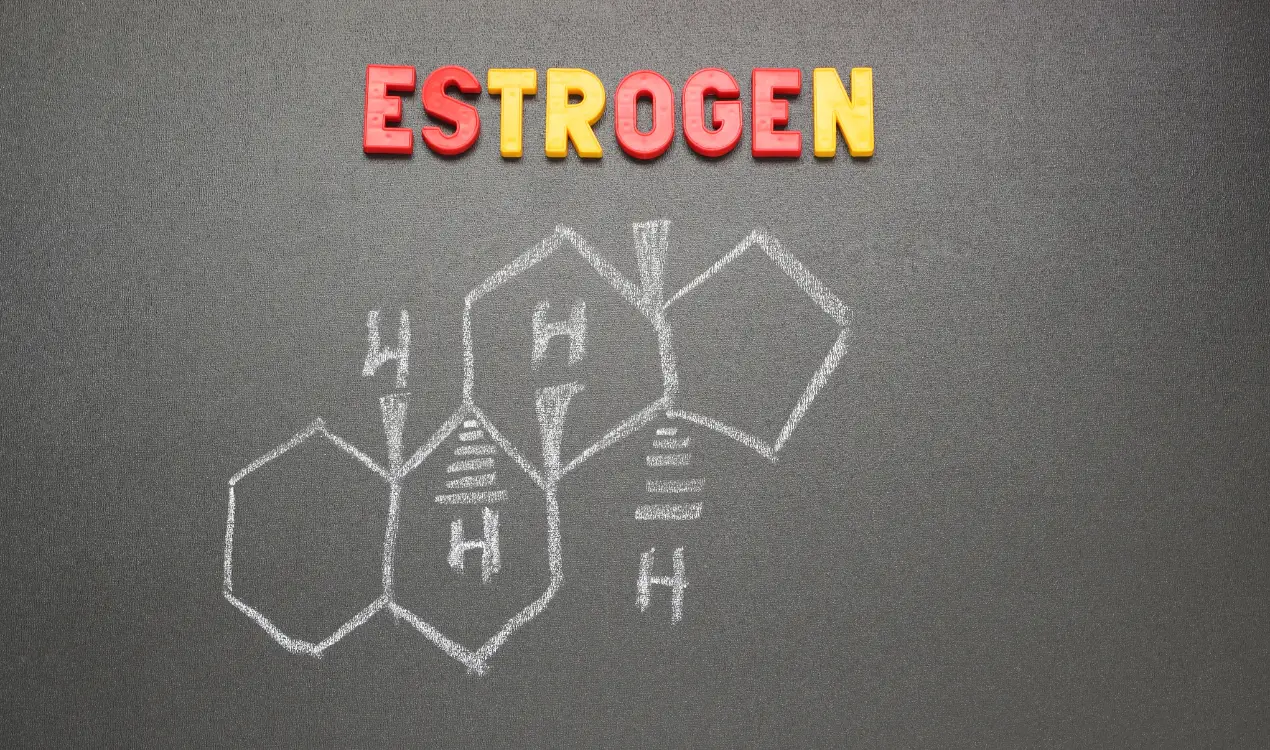
How Estrogen Controls Your Body Temperature
Estrogen acts as the calibrator for your hypothalamic thermostat — the brain region that keeps your internal temperature stable. In symptomatic postmenopausal women, estrogen withdrawal narrows the thermoneutral zone to virtually 0.0°C (±0.06°C), meaning any trivial rise in core temperature immediately triggers a hot flash (American Journal of Obstetrics & Gynecology, 1999). In asymptomatic women, the same zone measures approximately 0.4°C — enough buffer to absorb normal fluctuations without sweating or shivering.
The mechanism runs through central α2-adrenergic pathways. Declining estrogen reduces norepinephrine activity in the hypothalamus, destabilizing the thermostat. When estrogen is restored through hormone therapy, the thermoneutral zone widens again and hot flashes stop (American Journal of Medicine, 2005). This is why HRT is so effective — it repairs the physiological mechanism, not merely masking symptoms.
After menopause, estradiol falls below 30 pg/mL from a premenopausal range of 100–250 pg/mL, while FSH rises approximately 15-fold (NIH Research, 2020). That steep hormonal drop is what makes the transition so thermally disruptive — and why even spicy food, a warm drink, or brief stress can trigger a flash.
Does Your Menstrual Cycle Cause Sweating?
Sweating before your period is real, physiologically driven, and predictable. PMS affects approximately 43% of menstruating women in pooled meta-analyses (NIH Research, 2021). During the late luteal phase — roughly the 7–10 days before menstruation — progesterone peaks and then falls sharply. This hormonal shift triggers sympathetic nervous system overactivity and reduced parasympathetic tone, producing night sweats, increased daytime perspiration, and heat sensitivity alongside other premenstrual symptoms.
Luteal-phase sweating follows a monthly pattern — it begins around mid-cycle, peaks before your period, and resolves within 1–2 days of menstruation. If your sweating tracks that cycle reliably, the mechanism is progesterone withdrawal, not estrogen deficiency. True perimenopausal hot flashes are unpredictable, occur day and night, and don't resolve with menstruation. Tracking your sweating against your cycle calendar is a useful first step before pursuing more intensive evaluation.

Why Do You Sweat More During Pregnancy?
Pregnancy produces a physiological contradiction: your body lowers its resting core temperature while simultaneously increasing sweating. A 2024 exercise physiology cohort study found that pregnant women's resting core temperature is 0.47°C lower than non-pregnant controls — a protective adaptation to prevent fetal heat stress (NIH Research, 2024). The body achieves this by progressively lowering the sweating onset threshold by approximately 0.08°C per month of gestation, causing earlier and heavier sweating in response to smaller temperature changes.
The practical result: pregnant women sweat significantly more. During exercise, pregnant athletes lose 47% more sweat fluid than non-pregnant controls (0.81L vs. 0.50L per session, p<0.001). The body is working harder to protect the fetus from heat.
Pregnancy sweating is physiologically normal and temporary. It typically resolves within weeks of delivery as hormone levels normalize. If heavy underarm sweating persists beyond 6–8 weeks postpartum — particularly if it's bilateral and present regardless of temperature or activity — it's worth evaluating for primary hyperhidrosis, which commonly becomes noticeable during postpartum hormonal shifts.

Perimenopause: When Hot Flashes Begin
For most women, perimenopause is where estrogen-driven sweating becomes most disruptive — often years before menstruation stops. Between 75 and 80% of women experience vasomotor symptoms during the menopausal transition (NIH Research, 2021). Most expect symptoms to last a few months. The SWAN data tells a different story.
The SWAN study — a longitudinal cohort of 1,449 women followed through the full menopausal transition — found that median total vasomotor symptom duration is 7.4 years overall. Women who became symptomatic in early perimenopause experienced symptoms for a median of more than 11.8 years (JAMA Internal Medicine, 2015). Race shapes the pattern too: African American women experience symptoms for a median of 10.1 years; Chinese women for 5.45 years.
The duration data is clinically significant. Most women aren't choosing between "treating this for a few months" and "waiting it out" — they're choosing between 7–12 years with or without treatment.
Median duration 7.4 years — early onset often means 11+ yearsHot Flash or Hyperhidrosis? How to Tell the Difference
Primary hyperhidrosis affects approximately 4.8% of the US population — about 15.3 million people — with onset typically in childhood or young adulthood (average axillary onset age: 19 years) (NIH Research, 2016). In perimenopausal women, it's frequently misattributed to hormones. The two conditions are mechanistically unrelated and respond to completely different treatments (Scientific Archives, 2022).
At QD Skinnovations, we regularly see patients who've spent years adjusting hormone dosing, modifying diet, and tracking triggers — without meaningful improvement in underarm sweating. In many of these cases, the underarm sweating was hyperhidrosis all along. It coexists with hot flashes frequently, but HRT won't reduce it because the mechanisms are entirely separate. Distinguishing the two early saves years of misdirected treatment.
The single most diagnostic question: Does your underarm sweating stop completely while you sleep? If yes — primary hyperhidrosis is likely. Hyperhidrosis is characteristically absent during sleep. Hot flashes and night sweats, by definition, occur during sleeping hours.
For underarm-specific hyperhidrosis, miraDry is the only FDA-cleared permanent treatment — using microwave energy to eliminate underarm sweat glands in a single in-office visit. Learn more about permanent underarm sweat reduction with miraDry at QD Skinnovations.

Is It Hormonal Sweating or Hyperhidrosis?
If your underarm sweating is heavy, year-round, and stops completely during sleep — that's likely hyperhidrosis, not a hot flash. At QD Skinnovations in Carson, CA, miraDry permanently eliminates underarm sweat glands in a single visit.
Book a Hyperhidrosis Evaluation →What Can You Do About Hormonal Sweating?
The right treatment depends entirely on which mechanism is driving your symptoms — which is why accurate diagnosis matters before choosing an approach.
For Vasomotor Symptoms (Hot Flashes)
- HRT — 75–90% reduction in hot flash frequency; first-line treatment
- SSRIs / SNRIs — 24–69% frequency reduction; non-hormonal option
- Gabapentin — 54% frequency reduction
- Fezolinetant — 93% reduction in Phase 3 trials (NK3 antagonist)
- Lifestyle — reduce alcohol, caffeine, spicy food; cool bedroom
For Primary Hyperhidrosis
- Clinical antiperspirants — up to 20% aluminum chloride; first-line
- Botox — ~72% reduction at 12 months; lasts 4–17 months; requires repeat
- miraDry — permanent; FDA-cleared; eliminates sweat glands in one visit; glands don't regenerate
Primary hyperhidrosis doesn't respond to hormonal adjustments, dietary changes, or lifestyle modifications. The mechanism is gland-level — not hormonal. If sweating has persisted despite years of hormonal management, the mechanism may never have been hormonal.
Frequently Asked Questions
The Bottom Line
Estrogen shapes sweating at every stage of a woman's hormonal life. Progesterone withdrawal drives premenstrual night sweats. Pregnancy lowers the sweating threshold to protect the fetus. Perimenopause narrows the hypothalamic thermostat until any minor temperature change triggers a flash — a pattern that lasts 7.4 years on average, and more than 11 years for women who start experiencing symptoms early.
But sweating in perimenopausal women isn't always hormonal. Primary hyperhidrosis is chronic, bilateral, and absent during sleep — and it coexists with menopause more often than it's recognized. These two conditions respond to completely different treatments. Using HRT for hyperhidrosis, or ignoring underarm symptoms as "just menopause," both lead to years of unnecessary suffering.
For chronic underarm sweating that stops when you sleep, permanent underarm sweat reduction with miraDry at QD Skinnovations in Carson, CA is the most direct path to a permanent answer.