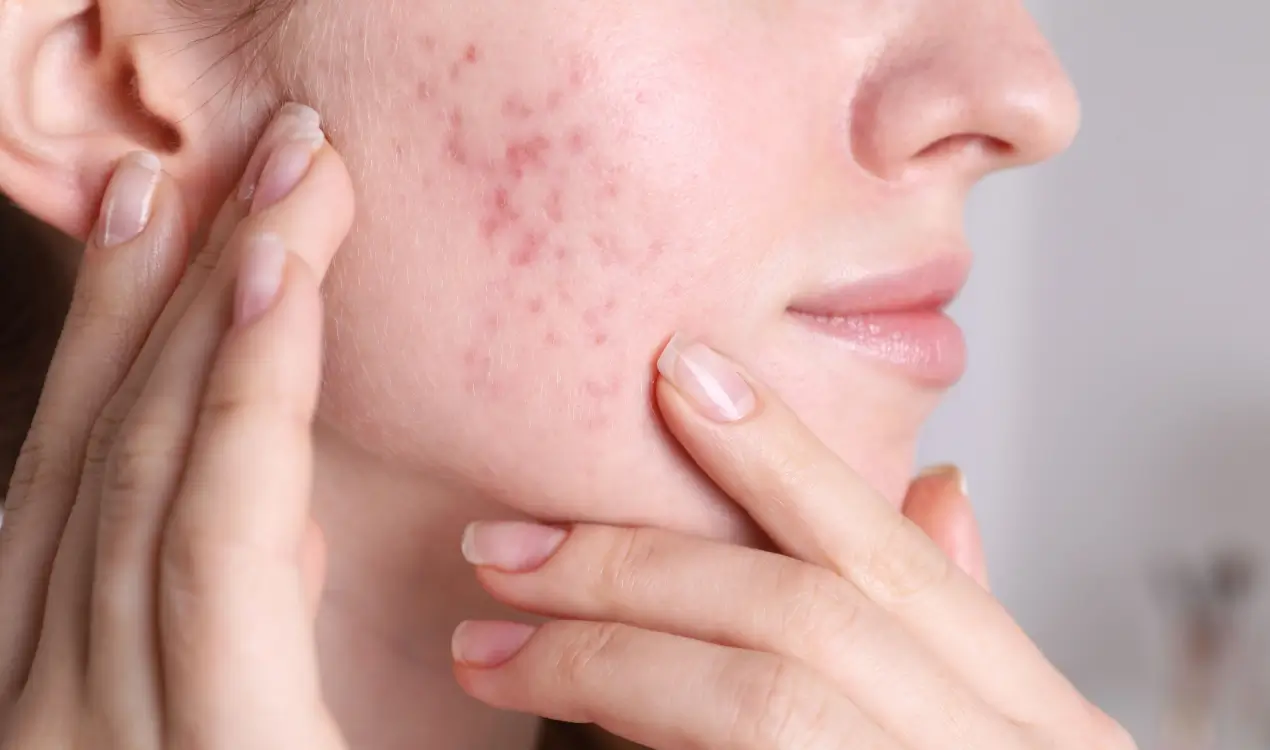

Acne scars affect more people than most realize. Up to 71.3% of acne patients develop some form of scarring, according to a 2025 comprehensive clinical study of 269 patients (Dermatology Practical & Conceptual, 2025). That's not a small subset - that's the majority. And unlike active breakouts, scars don't fade with time or over-the-counter products alone.
This guide covers every professional acne scar treatment available at QD Skinnovations in Carson, CA - from Sylfirm X RF microneedling to ResurFX fractional laser, VI Peel, PRP/PRF, and more. Whether your concern is deep pitted scars, dark marks, or redness that won't quit, you'll find a clear explanation of what works, why it works, and how to get started.
Key Takeaways
- Up to 71.3% of acne patients develop scarring - most require professional treatment to see meaningful improvement
- QD Skinnovations offers a full treatment stack: Sylfirm X, ResurFX, PRP/PRF, VI Peel, V Carbon Peel, IPL, Q-switched Laser, and Aquagold
- Scar type determines treatment - atrophic scars, PIH, and PIE each respond to different modalities
- Clinical studies show 50-90% improvement in scar appearance with a consistent treatment protocol (Advanced Dermatology, 2025)
- QD Skinnovations serves Carson, Torrance, Long Beach, Gardena, Compton, Wilmington, and the wider South Bay
What Are Acne Scars - and Which Type Do You Have?
Identifying your scar type is the foundation of effective treatment. Not all acne scars respond to the same modalities, and confusing one type with another leads to months of frustration and wasted money. A 2023 population-based study found that 47% of people with acne vulgaris develop visible acne scarring (PMC/NCBI, 2023) - and that figure climbs well above 70% in clinical settings where patients actively seek care.

Ice Pick Scars
Ice pick scars are narrow, deep channels that extend into the dermis - sometimes down to the subcutaneous layer. They look like small puncture marks and are most common on the cheeks. Because they're deep and narrow, they're among the harder scar types to treat with surface-level lasers alone. RF microneedling reaches the dermal depth where these form.
Boxcar Scars
Boxcar scars have sharper, more defined edges and a wider base than ice pick scars. Think of a rectangular depression in the skin. They're caused by the destruction of collagen during inflammatory acne. Fractional lasers and RF microneedling both target the collagen remodeling needed to lift and fill these depressions over time.
Rolling Scars
Rolling scars give skin a wavy, uneven texture - caused by fibrous bands that tether the skin downward. They're often the most visible in angled lighting. Subcision combined with biostimulation treatments like PRP or Sylfirm X tends to produce the best results for rolling scar patterns.
Post-Inflammatory Hyperpigmentation (PIH)
PIH shows up as flat dark spots or patches left behind after a pimple heals. It's not technically a scar - there's no structural damage to the dermis. Melanin overproduction during inflammation causes the discoloration. Treatments like VI Peel, Q-switched Laser, and IPL target PIH effectively without the same depth of intervention needed for atrophic scars.
Post-Inflammatory Erythema (PIE)
PIE is the red or pink discoloration that lingers after acne heals, most visible in lighter skin tones. It's caused by damaged capillaries near the skin's surface. IPL therapy is particularly well suited for PIE, targeting the vascular component directly.
Hypertrophic and Keloid Scars
These are raised scars caused by excess collagen production during healing. They're less common on the face but do occur. Treatment involves a different protocol than atrophic scars, and a thorough evaluation at QD Skinnovations will clarify which category applies to you.
Why Don't Acne Scars Fade on Their Own?
Most people expect their skin to recover with time. It doesn't - at least not from atrophic scarring. Research published in 2023 shows that acne scar patients experience significantly increased rates of depression, anxiety, and suicidal ideation, and that a patient's own perception of scar severity is a stronger predictor of psychological distress than clinical grading (PMC - Beyond the Surface, 2023). This matters because it tells us two things: scars are a real medical concern, and waiting rarely helps.
The reason atrophic scars don't self-resolve is structural. When severe acne destroys collagen and elastin in the dermis, the body patches that damage with scar tissue - but it doesn't rebuild the same organized collagen matrix that healthy skin has. The result is a permanent depression or irregularity in the skin's surface.
Topical products can't fix this. Brightening serums and retinoids work on the epidermal layer. Atrophic scarring exists below that in the dermis. Applying a brightening serum to a boxcar scar is like painting over a pothole - the color changes, but the structure doesn't.
Unique Insight
Most patients come in having tried brightening serums and retinoids for months. What they don't realize is that surface-level products can fade PIH (discoloration) but have zero effect on atrophic scarring, which is a structural issue in the dermis - not a surface one. The distinction between these two changes everything about which treatment to book.
PIH behaves differently. Those flat dark marks will often fade slowly on their own - but that process can take 12-24 months without treatment. Professional peels, lasers, and pigment-targeting devices compress that timeline dramatically.
What Acne Scar Treatments Are Available at QD Skinnovations?
QD Skinnovations offers one of the most complete acne scar treatment menus in the South Bay. Rather than a one-size-fits-all approach, the clinic matches treatment modalities to your specific scar type, skin tone, and downtime tolerance. Treatments range from clinical-grade laser and RF microneedling to medical peels and micro-infusion - and most protocols combine multiple modalities for compounding results.
Personal Experience - QD Skinnovations
At QD Skinnovations, we begin every scar consultation with a VISIA Complexion Analysis - an imaging system that maps scar depth, pigmentation patterns, and texture variance across all skin layers. This means we're not guessing about your scar type; we're building a protocol based on what the data shows.
Sylfirm X RF Microneedling - The Flagship Scar Treatment
Sylfirm X is the most advanced RF microneedling platform available for acne scar treatment, and it's QD Skinnovations' flagship procedure for structural scarring. It delivers precisely controlled radiofrequency energy through gold-tipped microneedles at programmable depths - remodeling collagen in the dermis where atrophic scars live.
A 2025 split-face clinical trial found that approximately 95% of subjects achieved "satisfied" or "very satisfied" improvement ratings with RF microneedling - the same core technology as Sylfirm X (PMC, 2025). That's not a marginal result. That's near-universal patient satisfaction in a controlled clinical setting.
A separate systematic review of 16 studies and 481 patients confirmed fractional RF microneedling as an effective monotherapy for facial acne scarring - meaning it produces results even without being stacked with other treatments (PubMed, 2025).
What makes Sylfirm X stand apart from older RF microneedling systems is its dual-mode technology. It operates in both pulsed wave and continuous wave modes, allowing the provider to target different depths and tissue characteristics in the same session. For acne scars, this means more precise delivery into the scar tissue rather than indiscriminate heating.
Sylfirm X is also available with an Exosomes upgrade at QD Skinnovations. Exosomes are cell-signaling molecules derived from stem cells. Applied immediately after Sylfirm X, they amplify the healing and regeneration response - particularly valuable for patients with deeper scars or those looking to accelerate their results timeline.
Most patients need 3-4 sessions spaced 4-6 weeks apart. Downtime is typically 24-72 hours of redness and mild swelling.
View the Sylfirm X service page

ResurFX Non-Ablative Fractional Laser
ResurFX is QD Skinnovations' fractional laser platform for acne scar treatment. It uses a non-ablative 1565nm wavelength to create thousands of microscopic treatment zones in the skin - triggering controlled wound healing and collagen production without removing the outer skin layer. That means measurable results with less downtime than ablative options.
In recent 2024-2025 clinical trials, non-ablative fractional laser technology achieved 60-75% improvement on the ECCA scoring scale for acne scars (PMC - Fractional Laser Systematic Review, 2025). ECCA is a validated clinical grading tool for atrophic acne scars, so these are objective, measurable improvements.
ResurFX is particularly effective for shallow boxcar scars, rolling scars, and overall skin texture and tone improvement. It works well for patients who want noticeable results but can't afford extended social downtime. Most patients experience 2-4 days of redness and mild swelling. Typical protocols run 3-5 sessions spaced 4-6 weeks apart.
ResurFX can be combined with Sylfirm X for patients with mixed scar types - laser addressing texture and surface, RF microneedling addressing structural depth.
PRP/PRF Microneedling - Growth Factor Biostimulation
PRP (Platelet-Rich Plasma) and PRF (Platelet-Rich Fibrin) microneedling draws on your own blood's healing compounds to accelerate collagen remodeling. Your blood is processed to concentrate the growth factors, then applied topically or injected during microneedling - flooding the treatment zone with the biological signals that drive repair.
A 2024 scoping review in PMC confirmed that PRP combined with microneedling produces markedly superior improvement compared to microneedling alone, with significantly greater collagen and elastic fiber deposition in biopsy samples (PMC - Microneedling with PRP Scoping Review, 2024). If you're already doing microneedling, skipping PRP/PRF is leaving results on the table.
At QD Skinnovations, PRP/PRF microneedling is available as a standalone treatment and as an add-on upgrade to Sylfirm X sessions. PRF is the newer formulation - it releases growth factors more slowly and over a longer window, which tends to produce more sustained results than PRP.
View the PRP/PRF Microneedling service page
VI Peel and V Carbon Peel - Medical Chemical Peels
Chemical peels are an underrated tool in the acne scar toolkit - particularly for PIH, early atrophic scarring, and skin tone irregularities. QD Skinnovations offers both the VI Peel and V Carbon Peel.
The VI Peel is a TCA-based medical chemical peel that penetrates to the mid-dermis. Clinical evidence shows TCA-based peels achieved greater than 70% improvement in 73.3% of patients treated for atrophic acne scars (JCAD - Evidence and Considerations in Chemical Peels). It's particularly effective for PIH, superficial scarring, and uneven tone - and it's well tolerated across skin tones, including darker complexions that carry higher risk with other resurfacing methods.
The V Carbon Peel is a laser-assisted carbon peel that targets pore size, oil production, and surface texture. It's an excellent maintenance treatment for scar-prone skin, especially for patients managing active acne alongside their scar treatment.
Peels typically require 2-3 sessions for the VI Peel and 3-5 for the Carbon Peel, with 1-7 days of peeling post-treatment.
Q-switched Laser and IPL Therapy - Targeting Pigment and Redness
Not every acne scar concern involves structural damage. For patients dealing primarily with PIH (dark marks) or PIE (lingering redness), Q-switched Laser and IPL Therapy are the most targeted options available.
The Q-switched Laser shatters melanin deposits with ultra-short pulses of light - specifically targeting the pigment clusters that create dark acne marks without affecting surrounding tissue. It's highly effective for persistent PIH that hasn't responded to topicals.
IPL (Intense Pulsed Light) Therapy targets the vascular component of post-inflammatory erythema - the damaged capillaries that keep that pink or red discoloration alive after acne heals. It's one of the few treatments that directly addresses PIE rather than treating around it.
View the IPL Therapy service page | Q-switched Laser service page
Aquagold Micro-Infusion - Surface-Level Support
Aquagold is a micro-infusion device that delivers a custom cocktail of peptides, brighteners, and skin-boosting actives through 24-karat gold microneedles into the upper dermis. It's not a primary scar treatment on its own, but it serves a meaningful supporting role - enhancing skin quality, glow, and tone between more intensive sessions. Many patients include Aquagold as a maintenance step or preparation treatment before a major resurfacing session.
Also available at QD Skinnovations: Peel and Glow (a gentler entry-level chemical peel for maintenance), Skin Classic for surface irregularities, and Dermaplaning as a prep and maintenance step that supports treatment absorption.
Average % Improvement in Acne Scar Appearance by Treatment (2024-2025 Studies)
Source: PMC systematic reviews and network meta-analysis, 2024-2025. Values represent approximate mean improvement ranges reported across included studies.
Which Treatment Is Right for Your Scar Type?
Matching treatment to scar type is the single biggest factor in outcomes. A 2025 network meta-analysis found that laser combined with PRP ranked highest overall for reducing acne scar severity - outperforming every single-modality approach tested across multiple studies (PMC - Systematic Review & Network Meta-Analysis, 2025). The takeaway? Combination protocols consistently beat single treatments.
Here's a practical decision guide based on your scar type. Not sure which category you fall into? That's what the VISIA consultation at QD Skinnovations is for.
| Scar Type | First-Line Treatment | Combination Boost |
|---|---|---|
| Ice Pick (deep, narrow) | Sylfirm X RF Microneedling | + PRP/PRF for collagen response |
| Boxcar (wide, defined edges) | ResurFX or Sylfirm X | Laser + RF combo for depth + texture |
| Rolling (wavy, tethered) | Sylfirm X + PRP/PRF | Subcision (discuss at consult) |
| PIH (flat dark marks) | VI Peel or Q-switched Laser | + IPL for mixed pigment/vascular |
| PIE (pink/red marks) | IPL Therapy | + V Carbon Peel for maintenance |
| Mixed types (most common) | Laser + PRP protocol | Full VISIA-guided combination plan |
| Hypertrophic (raised) | Protocol discussed at evaluation | Differs from atrophic protocol |
How Many Sessions to See Results? (By Treatment Type)
Sessions spaced 4-6 weeks apart for optimal collagen remodeling between treatments.
Source: QD Skinnovations clinical protocols aligned with published literature. Individual needs vary based on scar severity.
How Many Sessions Do You Need - and What Does Recovery Look Like?
The honest answer: most patients need a series, not a single session. Professional acne scar treatments achieve 50-90% improvement in scar appearance within 6-12 months when a consistent treatment protocol is followed (Advanced Dermatology, 2025). That range reflects both scar severity differences and protocol consistency - patients who complete their full series see dramatically better results than those who stop after one or two sessions.
Unique Insight
The most common mistake we see is patients booking a single session expecting dramatic results - then concluding the treatment doesn't work. Collagen remodeling is a biological process that takes 60-90 days per treatment cycle. A 3-session Sylfirm X protocol isn't three treatments; it's one protocol with three activation points - each building on the collagen response from the last.
Sylfirm X RF Microneedling
3-4 sessions, 4-6 weeks apart. Downtime: 24-72 hours redness and mild swelling. Improvement visible after session 2. Full results at 3-6 months post-series.
ResurFX Fractional Laser
3-5 sessions, 4-6 weeks apart. Downtime: 2-4 days redness and mild swelling. Skin feels smoother and more refined after each session.
PRP/PRF Microneedling
3-4 sessions, 4-6 weeks apart. Downtime: 24-48 hours redness. Can be combined with Sylfirm X in the same session for maximum biostimulation.
VI Peel
2-3 sessions, 4 weeks apart. Downtime: 3-7 days visible peeling. Best for PIH, tone irregularities, and shallow texture concerns.
V Carbon Peel / IPL Therapy
3-5 sessions, minimal downtime. Lower-intensity treatments well suited to maintenance and mild concerns. Ideal for PIE and oil control.
Q-switched Laser
3-5 sessions depending on PIH depth. Downtime: minimal to mild depending on settings used. Targets melanin deposits precisely.
Sessions spaced too close together don't compound - they compete. Your provider at QD Skinnovations will space your sessions at the interval that allows each treatment to complete its biological cycle before the next begins.
What Percentage of Acne Patients Develop Scars?
Source: Dermatology Practical & Conceptual, 2025 (n=269); PMC/NCBI, 2023. PIH estimate from supporting clinical literature.
Why Do South Bay Patients Choose QD Skinnovations for Acne Scar Treatment?
QD Skinnovations sits at 21039 S Figueroa St Suite 201, Carson, CA 90745 - centrally positioned in the South Bay for patients coming from Torrance, Long Beach, Gardena, Compton, Wilmington, and throughout the Carson corridor. Finding a clinic with this level of treatment depth in the South Bay isn't always straightforward. Most medspas in the area offer one or two modalities. QD Skinnovations maintains a full-stack menu because most acne scar patients need more than one approach.

Every new patient consultation at QD Skinnovations begins with a VISIA Skin Analysis. VISIA is a multi-spectral imaging system that photographs the skin under different light conditions - visible light, UV light, and cross-polarized light - to map surface and subsurface concerns simultaneously. For acne scar patients, this means identifying not just what's visible in the mirror, but the full landscape of pigmentation, texture disruption, and vascular irregularity beneath the surface.
This data becomes the foundation of your personalized treatment protocol. You don't leave a QD Skinnovations consultation with a generic recommendation. You leave with a specific plan - which treatments, in which order, at what intervals - based on your actual skin imaging data.
The clinic is open Tuesday through Saturday, 10 AM to 6 PM. You can reach the team at 424-489-4569. The service area covers Carson, Torrance, Long Beach, Gardena, Compton, Wilmington, and surrounding South Bay communities.
Frequently Asked Questions About Acne Scar Treatment in Carson, CA

Can acne scars be completely removed?
Most atrophic acne scars can be significantly reduced - but complete removal isn't always achievable for deep structural scars. Clinical protocols consistently produce 50-90% improvement in scar appearance (Advanced Dermatology, 2025). In practice, that level of improvement is often dramatic enough that scars become imperceptible in normal lighting and daily life.
What's the difference between PIH (dark spots) and true acne scars?
PIH (post-inflammatory hyperpigmentation) is flat discoloration - a melanin response, not structural damage to the dermis. True atrophic scars involve physical depressions caused by collagen loss. PIH can fade on its own or respond quickly to peels and pigment lasers. Atrophic scars require deeper intervention like RF microneedling or fractional laser. Treating one as the other produces disappointing results.
Is Sylfirm X painful - and what's the downtime?
Sylfirm X is performed with topical numbing cream applied 30-45 minutes before treatment. Most patients describe the sensation as mild prickling or warmth - tolerable and short-lived. Downtime is typically 24-72 hours of redness and mild swelling, similar to a moderate sunburn. A 2025 clinical trial showed approximately 95% patient satisfaction with the technology (PMC, 2025), which reflects both its efficacy and tolerability in clinical settings.
How long before I see results from acne scar treatment?
Initial improvements are often visible 4-6 weeks after your first session as new collagen begins forming. More significant results typically appear after session 2 or 3. Full results develop 3-6 months after completing your final session - collagen maturation is the rate-limiting step. Patients who complete a full 3-4 session protocol see results in the 50-90% improvement range (Advanced Dermatology, 2025).
Can I get acne scar treatment if I still have active acne?
Active acne doesn't automatically disqualify you - but it needs to be managed before or alongside scar treatment. Treating scars while acne is actively creating new ones is counterproductive. At QD Skinnovations, your consultation will assess your current acne activity and recommend a treatment sequence. Some treatments like VI Peel and V Carbon Peel can address both active acne and early scarring simultaneously.
Start Your Acne Scar Treatment in Carson, CA
Acne scars don't have to be permanent. The treatments available today - RF microneedling, fractional laser, PRP/PRF biostimulation, medical peels - produce results that weren't achievable even a decade ago. A 2025 systematic review of 16 studies and 481 patients confirmed RF microneedling as an effective standalone monotherapy (PubMed, 2025). Combine that with the right supporting modalities for your scar type, and the improvement potential is significant.
QD Skinnovations in Carson, CA has the full treatment stack, the diagnostic tools, and the personalized approach to build a protocol that matches your specific scars, skin tone, and goals. Every consultation starts with VISIA imaging - because your protocol should be built on data, not guesswork.
The first step is a complimentary scar evaluation. Call 424-489-4569 or visit the clinic at 21039 S Figueroa St Suite 201, Carson, CA 90745. Open Tuesday-Saturday, 10 AM-6 PM. Serving Carson, Torrance, Long Beach, Gardena, Compton, Wilmington, and the entire South Bay.
Ready? Call now to book your evaluation.