
What you drink affects how much you sweat — directly and measurably. Some beverages activate the same sympathetic nervous system pathways that drive excessive sweating. Others reduce the thermoregulatory load, calm nerve signaling, or replenish minerals that regulate sweat gland excitability. For a full look at all natural approaches, see what stops sweating naturally.
This article covers exactly six drinks with genuine clinical or physiological support, plus the four categories of beverages that make sweating significantly worse. No filler. No miracle claims.
- Sage tea reduced sweating severity by 55–64% in two separate peer-reviewed RCTs (Advances in Therapy, 2011; Heliyon, 2021)
- Hyperhidrosis patients consume significantly more caffeine than controls — and 57% drink energy drinks weekly vs. 39.5% of controls (Clinical, Cosmetic and Investigational Dermatology, 2025)
- Green tea’s L-theanine attenuates sympathetic nervous system activation — the same pathway that drives stress-triggered sweating (Biological Psychology, 2007)
- Drinks reduce triggers — they don’t cure the neural root of primary hyperhidrosis
Do Drinks Actually Reduce Sweating?
Drinks can’t eliminate sweat glands or recalibrate the sympathetic nervous system. But they can meaningfully reduce the triggers that add volume to an already overactive baseline. Two pathways matter: thermoregulatory sweating (triggered by rising core temperature) and emotional/sympathetic sweating (triggered by anxiety and nerve hyperactivity). The best drinks address one or both — through direct temperature effects, modulating the sympathetic nervous system, or correcting deficiencies that lower the threshold for sweat gland firing.
Adequate hydration is the foundation of everything else on this list. Dehydration forces your body to work harder to maintain temperature, ultimately triggering more sweating to compensate. A landmark review in Physiological Reviews (2021) confirmed: the sweat threshold temperature rises approximately 0.06°C per 1% level of hypohydration, and reduced sweat rate leads to greater heat storage — meaning a dehydrated body eventually sweats more, not less.
Cool water specifically lowers core temperature upon ingestion, temporarily reducing the thermoregulatory drive to sweat. The International Hyperhidrosis Society recommends 11.5–15.5 cups daily as a baseline, adding 12 oz per 30 minutes of exercise — and explicitly notes that people with hyperhidrosis should never reduce fluid intake to try to sweat less.
Target: 2.5–3L daily. Drink cool, not ice-cold — extreme cold can cause gastric cramping during exercise or heat exposure.

Sage is the single most clinically supported herbal option for reducing sweating. Two separate randomized controlled trials demonstrate meaningful reductions in sweating severity:
- Bommer et al. (2011): An 8-week multicenter open-label RCT found daily sage leaf tablets reduced total sweating intensity by 64%. Severe episodes fell 79%; very severe episodes were eliminated entirely (Advances in Therapy).
- Dimpfel et al. (2021): A double-blind, placebo-controlled RCT found Menosan® Salvia officinalis reduced the Hot Flush Score by 55.3% versus 26.9% for placebo — reaching statistical significance by week 3 (Heliyon).
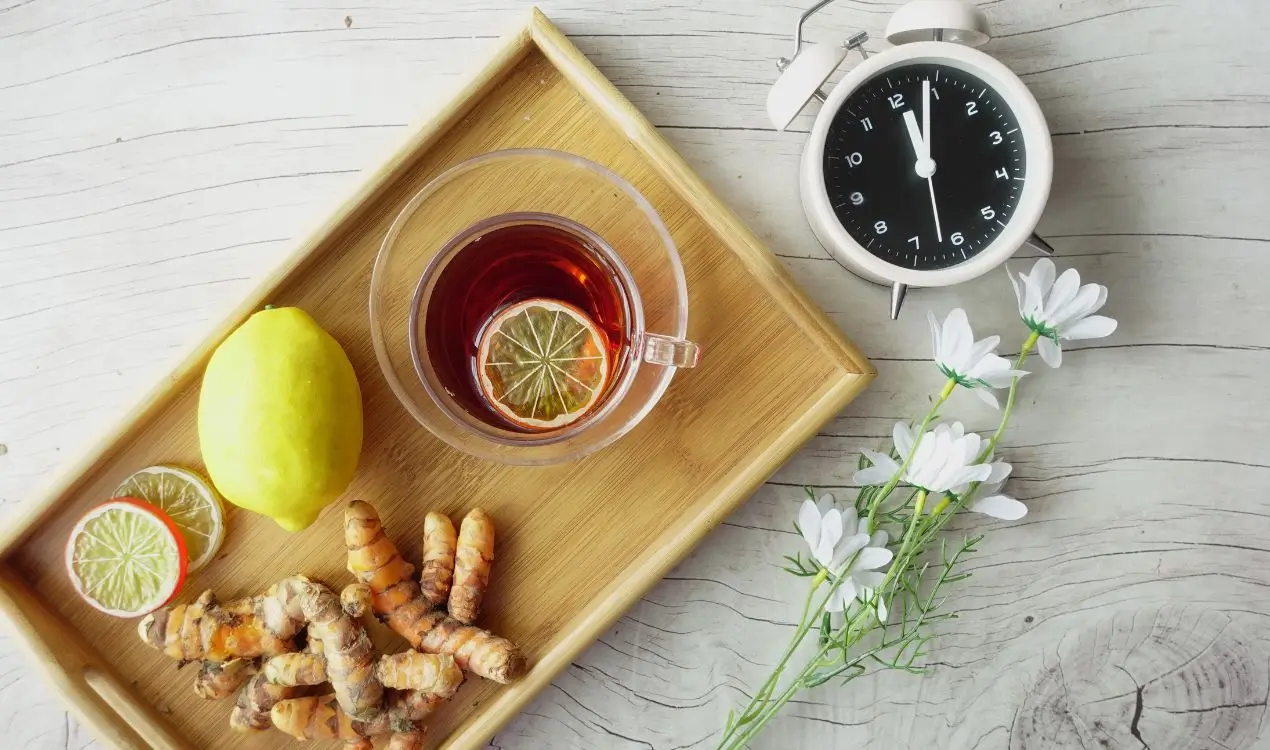
Sage’s mechanism involves rosmarinic acid and phytoestrogenic compounds that modulate hypothalamic temperature regulation and reduce secretory gland activity. Most trials enrolled menopausal women — not patients with a formal primary hyperhidrosis diagnosis — but the underlying eccrine biology is the same. How to use: Steep 1 tsp dried sage in hot water for 10 minutes; drink 1–2 cups daily. Allow 4–8 weeks to evaluate results.

Electrolytes — primarily sodium, potassium, and magnesium — regulate fluid distribution across cells and tissues. When you sweat heavily, you lose electrolytes along with water. Plain water alone doesn’t fully replace this loss; the resulting electrolyte imbalance can impair thermoregulation and force the body into an inefficient sweating cycle. Sugar-free electrolyte drinks maintain plasma osmolality, supporting efficient cardiovascular function under heat stress.
What to look for: Sodium 200–400mg per serving, potassium 100–200mg, magnesium 20–40mg. Avoid products with added caffeine — Celsius, Bang, Red Bull Sport — which explicitly undermine the purpose. Plain coconut water is a practical natural alternative.
Avoid: Sports drinks with caffeine added (Red Bull Sport, Monster Hydro) — they counteract the benefit entirely by stimulating sudomotor function.
The sweat-reducing benefit of green tea comes specifically from L-theanine — not from polyphenols or EGCG. L-theanine, an amino acid found almost exclusively in green tea, attenuates sympathetic nervous system activation. A crossover RCT published in Biological Psychology (2007) found L-theanine produced “a reduction in heart rate and salivary immunoglobulin A responses to an acute stress task” attributed specifically to “attenuation of sympathetic nervous activation” — the same pathway that drives emotional and stress-triggered sweating.
Practical use: 1–2 cups of green tea daily provides approximately 25–50mg L-theanine per cup. Supplements (100–200mg) offer more precise dosing. Allow 30–60 minutes for onset. Important: Standard green tea contains 25–50mg caffeine per cup. If caffeine triggers your sweating — and the research suggests it often does — use decaffeinated green tea or pure L-theanine supplements instead.
Magnesium regulates nerve signal transmission, including the sympathetic nerve-to-gland signals that control eccrine sweat output. When plasma magnesium is low, the excitability threshold of nerve membranes drops — sweat glands fire more easily. A case-control study in the International Journal of Dermatology (2011) found that patients with primary hyperhidrosis had significantly lower plasma magnesium concentrations than matched healthy controls, concluding that low extracellular magnesium may increase “membrane excitability of sweat glands or affect autonomic nervous system function.”
Magnesium-rich drinks offer a practical way to increase intake:
- Mineral water (e.g., Gerolsteiner: ~100mg magnesium per liter)
- Cashew or almond milk (unsweetened, fortified: 25–40mg per cup)
- Kefir or plain yogurt drinks (if dairy-tolerant: ~30–45mg per cup)
- Unsweetened cacao drinks (~50mg per serving — avoid versions with added caffeine)
Chamomile (Matricaria chamomilla) reduces anxiety and sympathetic nervous system activity — addressing the emotional pathway of sweating that temperature management can’t touch. A rigorous 26-week double-blind RCT published in Phytomedicine (2016) found that long-term chamomile extract (1,500 mg/day) maintained significantly lower generalized anxiety scores than placebo, with additional benefits including reduced blood pressure. For people whose heaviest sweating occurs during stressful situations, chamomile’s anxiolytic effect works on the same hypothalamic-sympathetic axis that’s hyperactive in primary hyperhidrosis.
How to use: 2–3 cups daily (steep 2 tsp dried flowers for 10 minutes). Allow 2–4 weeks to evaluate effect on stress-triggered sweating. Contraindicated in ragweed allergy (cross-reactivity).
Drinks That Make Sweating Significantly Worse
Four categories of beverages consistently worsen sweating through distinct and well-documented physiological mechanisms.
⚠ Caffeine & Energy Drinks
A 2025 case-control study found hyperhidrosis patients had a median caffeine intake score of 186.6 vs. 151.0 in controls. 57% consumed energy drinks weekly vs. 39.5% of controls (Clinical, Cosmetic and Investigational Dermatology, 2025). Caffeine activates sudomotor function — directly stimulating the sympathetic nerve pathway to sweat glands.
⚠ Alcohol (Wine, Beer, Spirits)
A 2024 systematic review in Environmental Health found alcohol increases skin blood flow and elevates local sweat rates — consistent with vasodilation raising skin temperature and triggering thermoregulatory sweating. Red wine and spirits are the most commonly reported triggers.
⚠ Hot Beverages (Any Content)
Heat load from hot liquid raises core temperature directly, activating the thermoregulatory sweating pathway. Even hot water or hot herbal tea — despite any beneficial compound — can trigger sweating if consumed at high temperatures. Drink sage tea and chamomile tea warm, not steaming hot.
⚠ Spicy Drinks (Cayenne, Hot Sauce)
Capsaicin activates TRPV1 receptors expressed on eccrine sweat gland ducts, producing gustatory sweating independently of core temperature (Temperature, Szolcsányi, 2015). This is why spicy food causes sweating even in air-conditioned environments.
When Drinks Aren’t Enough
The six drinks above work within the physiology of sweat triggers. They don’t change the underlying cause of primary hyperhidrosis: overactive sympathetic nerve signaling to eccrine glands that are structurally normal but neurologically over-stimulated. Managing what you drink is a valuable layer — not a ceiling. For the full range of natural strategies that work alongside dietary changes, see what stops sweating naturally.
When sweating is interfering with work, social situations, or basic comfort despite dietary adjustments, it’s time to consider a clinical solution. For a broader overview of treatment options, see how to stop sweating so much in summer.

Ready for a Permanent Solution?
Drinks and dietary changes reduce triggers — they don’t cure primary hyperhidrosis. miraDry permanently eliminates underarm sweat glands using FDA-cleared microwave energy. Once the glands are gone, no drink, trigger, or nerve signal can make them sweat again. Our Carson, CA clinic offers complimentary consultations.
Book a Complimentary ConsultationFrequently Asked Questions
What is the best drink to stop excessive sweating?
Sage tea has the strongest clinical evidence — RCTs show a 55–64% reduction in sweating severity (Advances in Therapy, 2011; Heliyon, 2021). Water is essential for reducing thermoregulatory load. Electrolyte drinks help maintain fluid balance during heavy sweating. For primary hyperhidrosis, drinks reduce triggers but don’t address the underlying neural cause.
Can sage tea really reduce sweating?
Yes — two peer-reviewed RCTs show Salvia officinalis significantly reduces sweating severity: by 55.3% in a placebo-controlled trial (Heliyon, 2021) and up to 64% in an 8-week multicenter study (Advances in Therapy, 2011). Most trials studied menopausal sweating, but the anticholinergic-like mechanism applies broadly to eccrine gland activity. Allow 4–8 weeks to evaluate results.
Does drinking more water reduce sweating?
Staying hydrated reduces the thermoregulatory burden. Dehydration raises your sweat threshold temperature by approximately 0.06°C per 1% body water deficit, causing your body to heat up faster (Physiological Reviews, 2021). The International Hyperhidrosis Society recommends 11.5–15.5 cups daily and advises against reducing fluid intake to try to sweat less — it backfires.
Which drinks make sweating worse?
Caffeine is the most documented — hyperhidrosis patients consume significantly more caffeine than controls, and 57% drink energy drinks weekly vs. 39.5% of controls (Clinical, Cosmetic and Investigational Dermatology, 2025). Alcohol causes vasodilation and raises core temperature. Hot beverages activate thermoregulatory sweating. Spicy drinks activate TRPV1 receptors on eccrine sweat gland ducts, triggering gustatory sweating regardless of ambient temperature.
The Honest Bottom Line
Six drinks. One with strong RCT support (sage tea), one with solid physiological evidence (water), two that work through nerve pathway modulation (green tea/L-theanine, chamomile), one that corrects a documented mineral deficiency (magnesium-rich drinks), and one that maintains fluid balance under heavy sweating (electrolytes). None of them will stop primary hyperhidrosis. All of them make the condition more manageable, especially when paired with the broader strategies in what stops sweating naturally.
If you’ve optimized your drinks, eliminated the triggers, and sweating is still affecting your daily life — a consultation at QD Skinnovations in Carson, CA is the next practical step.